.png)

I have thick 1C Asian hair. I'll go through my Asian hair care routine and talk about products that work for me so you can learn what works for you.
My hair care routine didn’t just come to me in a miraculous dream, nor did it transpire from the greater world of reels and videos that the all-knowing algorithm suggested to me.
My Asian hair care routine for my 1C hair came from 15 years of experimentation, persistence, and tailored research.
I've gone to numerous global salons, so I didn’t have to come back to the American suburbs and have someone without Asian hair experience give me another bad haircut.
I’ve been burned too many times…
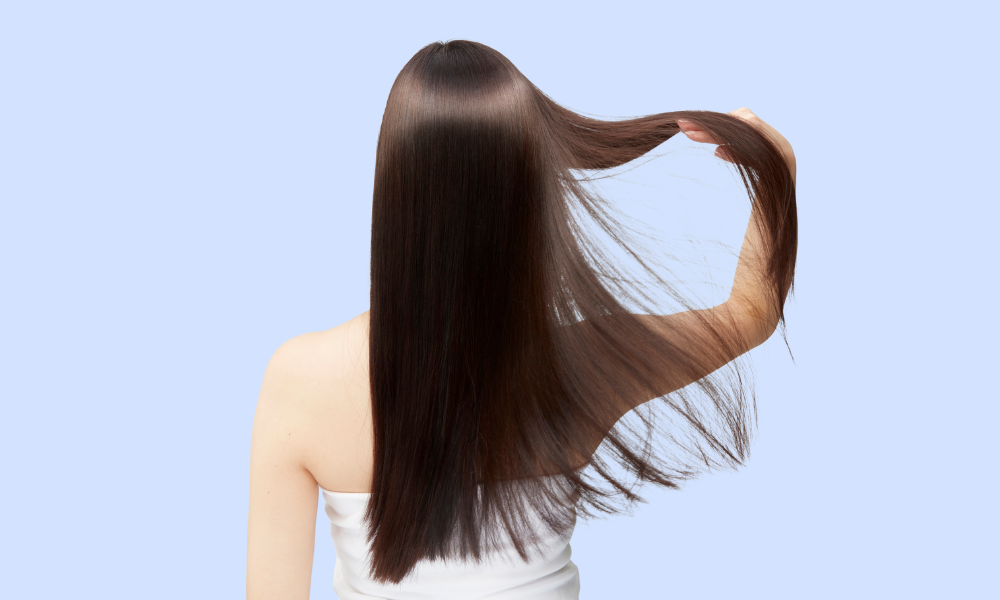
Let’s be real: Asian hair is unique.
Not because there's only one type. There’s actually great diversity among Asian hair types.
Asian hair is unique because it can be very dark, dense, thick, and coarse. We love to dye, bleach, and perm our hair all the time.
My hair tends to have a mind of its own. If there’s anything I’ve learned over the years about what it takes to tame my type C beast, it’s this:
Hair is mathable.
I’ve narrowed hair down to 4 main categories: hair type, combination hair, hair porosity and hair density. Here’s a quick overview.
.png)
Hair can be put into 4 different categories:
Hair types range from type 1 to type 4. And each number correlates with a letter A, B or C. If you have type 1 hair, it means you have straight hair.
It’s very important to type your hair correctly, or you risk damaging it and treating it like a different hair type. I’ve seen many curly hair girls believe that they have straight or wavy hair, which has led to them damaging their hair and scalp.
I don’t know whether or not we’re born with only one hair type, but what I can say about my adult Asian hair is this:
I have multiple hair types.
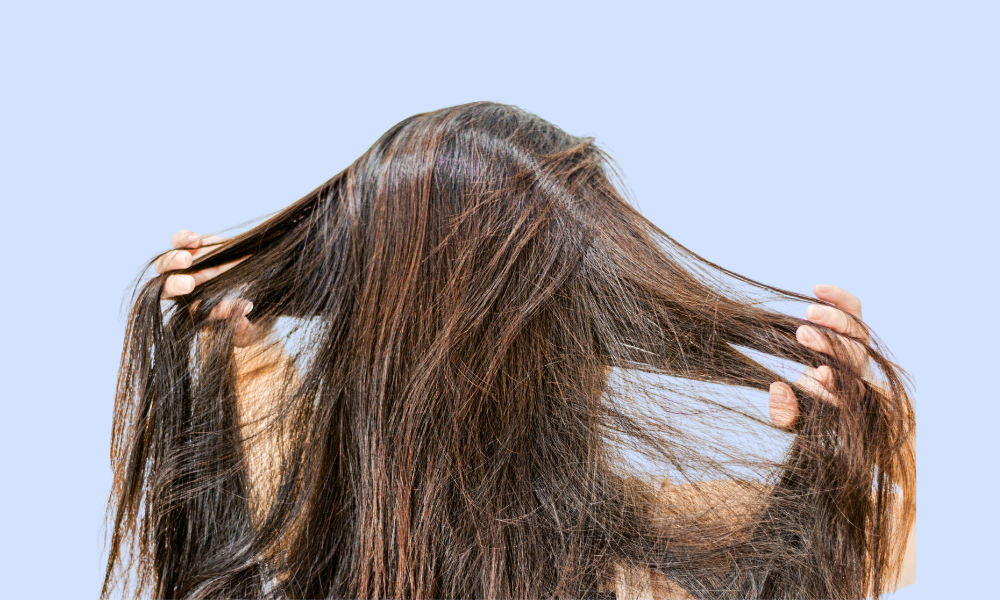
My main hair type is Type 1C. But the hair at the top of my head is much smoother and straighter than the hair at the base of my head. I treat that hair like it’s 1B hair.
You could have combination hair too if you find that your hair has different textures and coarseness.
Your hair porosity is determined by how easy it is for water (or moisture) to get into an individual hair strand. More specifically, it refers to how easily moisture can enter your hair shaft.
To determine your hair porosity, people commonly refer to the “water” or “float” test. You pluck a strand of your hair and wash it with some dish soap to remove any product coating it. Then you submerge it in a cup of water and check how long it takes to sink to the bottom. If it immediately sinks, that's high porosity. If it takes a long time, that's low porosity.
This method is pretty effective, but what’s been the most helpful for me is to notice how my hair reacts to certain products. If it makes my hair oily, then that means the product is just sitting on my hair and my hair hasn’t properly absorbed it. This would suggest I have low porosity hair.
Having awareness around my hair porosity has helped me determine what hair products are effective for me and what helps me achieve that gorgeous glass hair effect.
.png)
In simple terms, hair density is how much hair you have. In technical terms, hair density refers to the amount of hair follicles you have on your head.
Asians tend to have higher hair density, meaning we have a lot of hair. Even if an Asian has thin hair, it might appear to be “thick” because they have high hair density. But that doesn’t mean individual strands are coarse.
For example, I see a lot of East Asians on the 1A -1C hair type spectrum. However, I’ve noticed that the ones with 1A hair still have much higher density than White or Caucasian folk.
If you have high density hair, you might not realize your hair is thinning or you’re experiencing hair loss until it’s too late. I personally think it’s easier to abuse high density hair because you think it will never run out. You always want to make sure you are taking care of your scalp and stimulating new hair growth. A healthy lifestyle and taking care of your mental health will also help your hair health.
Damaged hair is prone to constant breakage or even hair loss.
Unfortunately, damaged hair is pretty common among Asians. We put our hair through so much heat, product, styling, bleaching and more in order to achieve that perfect look.
I have finally nailed down my Asian hair care routine after years of discovery.
My hair does best when I address what it is—combination 1C and 1B hair.
It’s not pin-straight, gets oily at the scalp only when my scalp is unbalanced, wavy and thick in the back but straight on the very top, and dense AF.
.png)
My hair doesn’t really get oily unless I try that whole “wash your hair only 1 - 2x a week” thing. I live in a city with pollution, so once or twice a week doesn’t work for my type 1C hair.
Your scalp is a garden. 🌱
You need a good shampoo and scalp massage tool for basic scalp care.
Scalp care is foundational. Your scalp is a precious garden. If you don’t treat it like the queen soil it is, your hair won’t reflect a fresh, healthy bounce.
Your scalp is literally the epicenter of all hair growth, so neglecting your scalp is the quickest way to destroy your beautiful garden.
My scalp care starts in the shower. I make sure to choose a shampoo tailored to my hair needs.
I also use a scalp massaging tool with silicon bumps to massage my scalp and increase circulation to the top of my head. I have to do this in order to nurture and grow healthy hair.
I like using this scalp massager because its dual-ended, high-quality nubs support blood circulation to the top of my head. The top of our head is where we typically get the least amount of circulation.
I wash my hair starting with shampoo and use my scalp massage tool to massage the top of my head while shampooing.
Pro tip: a good shampoo shouldn’t strip your hair of all its oils.
I have a few shampoos in rotation, but my current and all-time favorite is the Marsmade shampoo bar. I also use the Botanist Deep Moist Shampoo along with the companion Botanist Deep Moist Conditioner.
This shampoo and conditioner set leaves my hair so soft and manageable.
After shampoo and scalp massage, I run my conditioner from mid-hair shaft to ends.
Conditioner should NEVER go on the scalp or it could deposit heavy ingredients that blocks your scalps ability to breathe and shed dead skin cells.
The Botanist Deep Moist Conditioner’s main ingredients don’t include silicons but lightweight butters. It hasn’t triggered any breakouts and left my hair unweighed down by heavy artificial chemicals that could reduce that silky, bouncy feel.
Choosing the right conditioner can be tricky. It’s easy to believe that’s what actually makes our hair soft after a wash day, but it’s only one part of the entire hair care journey to silky perfection.
Aloe seriously improves my scalp and hair health. A good comb is important for spreading the product thoroughly through my hair.
I use the Aromatica Organic Aloe Vera Gel, which is from a Korean brand.
I love that the Aromatica comes in a pump and the scent is natural and non-irritating.
After I gently towel-dry my hair, I put about a quarter size amount in my hand to rub through my scalp. Then I use my favorite medium tooth comb from Mason Pearson to distribute the aloe from scalp to ends.
This helps to moisturize my scalp, giving it a drink to prevent flakes and itching. You can skip this step if you feel like your scalp doesn’t need dandruff or flaking care.
Next, I apply a pump of my Shu Uemura Universal Balm (Japanese brand) and spread it throughout my hair starting about 2 inches from my scalp.
Hair is weaker when it’s wet and can break more easily, so I dry my hair thoroughly to prevent breakage when I sleep.
I use my coveted and deeply loved Dyson Airwrap. I use its non-heat but crazy ninja wind energy with an ionic charge to straight-dry my hair.
Pro tip: use the round brush and comb-through attachments.
To ensure you’re making the most of your hair dryer and not adding more damage to your hair, I always prep my hair first, like in Step 3.
Finally, after blowdrying my hair straight, I run a fine-tooth comb through my hair again to ensure it’s detangled and sleek for bed. While I recommend a silk bonnet or silk scrunchie as a protective sleeping style, it’s up to you how much you need to heal those locks of yours.
And with that everyone, I give you the totality of my Asian hair care routine. My hope is that you can develop your own Asian hair care routine and start learning what’s best for your Asian hair type.

(6).png)
(7).png)